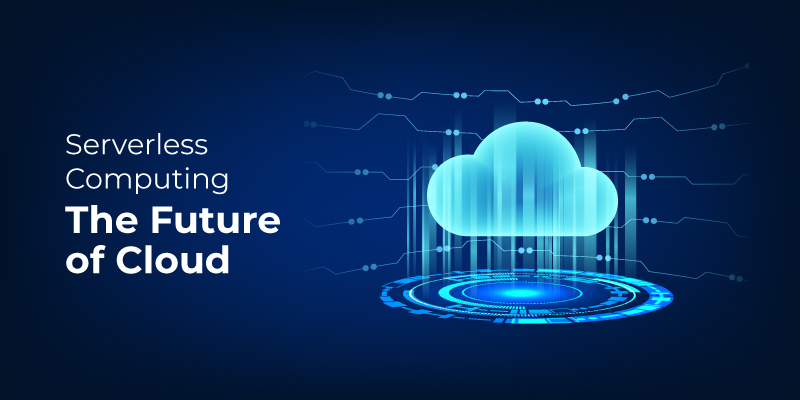
Serverless computing has reshaped the cloud computing landscape, offering a shift from traditional server management to an event-driven, fully managed architecture. In 2025, serverless is a mainstream solution, powering applications with scalability, cost-efficiency, and rapid development. The journey from on-premises infrastructure to cloud computing and now serverless reflects a drive to simplify and optimize application deployment. Often referred to as Functions as a Service (FaaS), serverless allows developers to focus on code, leaving server management to cloud providers. Research indicates the serverless market is valued at approximately $25 billion in 2025, driven by its ability to reduce costs and enhance business agility.
[row]
[col span__sm=”12″ padding=”10px 10px 10px 10px” bg_color=”rgb(255, 242, 242)” bg_radius=”6″ depth=”1″]
Core Concepts of Serverless Computing
Serverless computing operates on an event-driven model, where functions execute in response to triggers like HTTP requests or database updates. Key components include:
- Functions as a Service (FaaS): Small, stateless code units that run on demand.
- Backend as a Service (BaaS): Managed backend services like databases or authentication.
Unlike Infrastructure as a Service (IaaS) or Platform as a Service (PaaS), serverless eliminates server provisioning and maintenance, enabling faster deployment and focus on business logic.
[/col]
[/row]
[row]
[col span__sm=”12″ padding=”10px 10px 10px 10px” bg_color=”rgb(245, 255, 242)” bg_radius=”6″ depth=”1″]
Benefits of Serverless
Serverless computing offers significant advantages:
- Reduced Operational Overhead: Developers avoid server management, speeding up development cycles.
- Pay-per-Use Pricing: Billing is based on actual resource usage, reducing costs compared to pre-provisioned resources.
- Automatic Scaling: Functions scale dynamically to handle varying workloads, ensuring performance during traffic spikes.
These benefits make serverless ideal for businesses seeking agility and cost savings.
[/col]
[/row]
[row]
[col span__sm=”12″ padding=”10px 10px 10px 10px” bg_color=”rgb(242, 255, 255)” bg_radius=”6″ depth=”2″]
Current State and Adoption
In 2025, serverless adoption is surging across industries. North America leads the market, while Asia Pacific is the fastest-growing region, driven by digital transformation. Key sectors include:
- E-commerce: Powering scalable online platforms.
- Finance: Enabling real-time fraud detection and transaction processing.
- IoT: Supporting real-time data processing for connected devices.
Leading platforms include:
| Platform | Key Strength |
| AWS Lambda | Scalability and AWS integration |
| Microsoft Azure Functions | Seamless Azure ecosystem integration |
| Google Cloud Functions | Event-driven task support |
Common use cases include microservices, API-driven applications, and workflow automation. A 2023 Datadog report noted a 36% year-over-year increase in AWS Lambda usage, a trend likely continuing into 2025.
[/col]
[/row]
Advancements in Serverless Technology
Serverless technology is evolving rapidly in 2025:
- Performance Improvements: Efforts to reduce cold start latency include function reuse and optimized container management.
- Developer Tooling: Enhanced debugging and monitoring tools, plus CI/CD pipeline integration, streamline development.
- AI and Machine Learning: Serverless supports AI model deployment and data pipelines, leveraging its scalability.
[row col_bg=”rgb(243, 243, 243)” col_bg_radius=”6″ v_align=”equal” padding=”10px 10px 10px 10px”]
[col span=”4″ span__sm=”12″]
Security and Compliance
Security challenges in serverless include function-level vulnerabilities and event data risks. Secure coding practices and zero-trust principles, such as least privilege access and secure API gateways, are critical. Compliance with regulations like GDPR, HIPAA, and PCI-DSS is supported by monitoring tools, ensuring adherence in sensitive industries like healthcare and finance.
[/col]
[col span=”4″ span__sm=”12″]
Scalability and Cost Optimization
Serverless excels in handling unpredictable workloads through auto-scaling, ideal for high-traffic applications. However, inefficient function design can increase costs. Tools like AWS Cost Explorer help optimize expenses by monitoring usage and identifying inefficiencies.
[/col]
[col span=”4″ span__sm=”12″]
Serverless and Cloud-Native Synergy
Serverless integrates with cloud-native technologies like containers and Kubernetes, enhancing microservices architectures. DevSecOps practices, including security in CI/CD pipelines and GitOps for serverless, improve development workflows. Tools like Knative and OpenFaaS support serverless workflows, while Red Hat OpenShift caters to enterprise needs.
[/col]
[/row]
Industry-Specific Applications
Serverless offers tailored solutions:
- Healthcare: Processes patient data and supports telemedicine platforms.
- Finance: Powers fraud detection and real-time transaction systems.
- Retail: Manages e-commerce platforms and inventory systems.
These applications benefit from rapid deployment and compliance with industry regulations.
[row]
[col span__sm=”12″ padding=”10px 10px 10px 10px” bg_color=”rgb(255, 242, 250)” bg_radius=”6″ depth=”2″]
Challenges of Serverless Computing
Serverless faces technical and operational challenges:
- Technical Limitations: Cold start latency, stateful application constraints, and debugging complexities in distributed systems.
- Operational Challenges: Vendor lock-in risks, though open-source frameworks like AWS SAM or CDK improve portability.
[/col]
[/row]
[row]
[col span__sm=”12″ padding=”10px 10px 10px 10px” bg_color=”rgb(249, 242, 255)” bg_radius=”6″ depth=”2″]
Future of Serverless Computing
Looking ahead, serverless is set to redefine cloud architectures:
- Emerging Trends: Integration with serverless databases, edge computing, and 5G for IoT applications.
- Long-Term Impact: Simplifying development and enabling innovation.
- Predictions for 2030: Serverless-first strategies will dominate new applications, with market growth projected to reach $56.41 billion by 2031 at a 13.6% CAGR
[/col]
[/row]
Conclusion
Serverless computing in 2025 is a pivotal technology, offering scalability, cost-efficiency, and rapid development. Its adoption across industries, coupled with advancements in performance and tooling, positions it as a cornerstone of modern cloud strategies. While challenges like latency and vendor lock-in persist, ongoing innovations are addressing these issues. By 2030, serverless is likely to redefine how applications are built, driving the future of cloud computing.
[divider align=”center” width=”100%” color=”rgb(230, 230, 230)”]