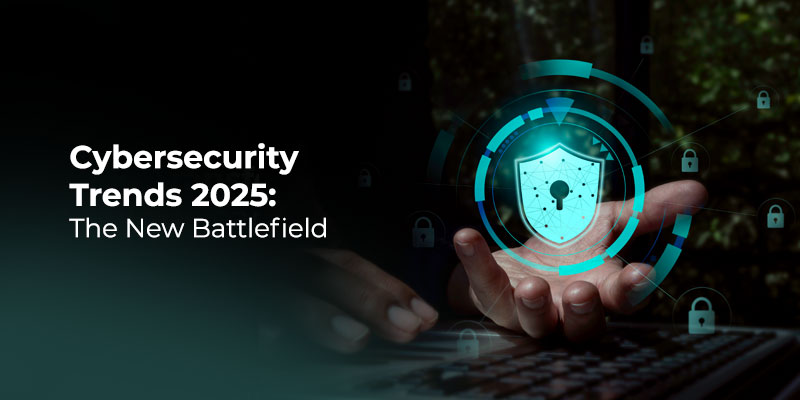
The cyber threat landscape is shifting rapidly. As we step into 2025, businesses, governments, and individuals must brace for an era where cyber warfare, ransomware, and AI-driven attacks redefine security paradigms. Threat actors are evolving, adapting, and outpacing traditional defense mechanisms. The increasing reliance on cloud environments, edge devices, and interconnected systems has expanded the attack surface, making cybersecurity a top priority across industries.
Cybercriminals are leveraging sophisticated AI algorithms, automation, and advanced social engineering tactics to breach even the most secure systems. Nation-states are engaging in cyber warfare, weaponizing malware and disinformation campaigns to disrupt economies and political stability. Ransomware groups are evolving, moving beyond simple data encryption to extortion and multi-layered attacks that cripple organizations. Meanwhile, the rapid growth of infostealers and zero-day exploits has created new vulnerabilities that demand a more proactive and intelligent security approach.
In this high-stakes environment, organizations must shift from reactive security measures to proactive defense strategies, integrating AI-driven cybersecurity, zero-trust models, and robust risk management frameworks. Here’s what’s shaping cybersecurity in 2025:
Cyber Wars: AI-Powered Conflict
- Nation-states are moving beyond espionage; they are deploying AI-driven cyber weapons to cripple infrastructures, disrupt economies, and manipulate public sentiment.
- Disinformation campaigns are no longer just about fake news—they now leverage deepfakes, AI-generated narratives, and bot networks to destabilize societies.
- Cyber warfare is becoming more autonomous, with AI-driven malware adapting in real-time to evade detection.
- The battlefield is not just digital—cyberattacks are directly impacting physical infrastructure, from power grids to transportation systems.
Ransomware: Extortion Over Encryption
- Attackers are shifting strategies—no longer just encrypting data but threatening to expose it, making backup solutions less effective as a countermeasure.
- Ransomware-as-a-Service (RaaS) is fueling an explosion of attacks, making it easier for even low-skill hackers to execute sophisticated breaches.
- Double and triple extortion are on the rise—attackers encrypt, steal, and threaten public disclosure while demanding payments from multiple stakeholders.
- The median ransom payment surged to $200,000 in 2024, with businesses in healthcare, finance, and education being prime targets.
Infostealers: Silent but Lethal
- These malware attacks skyrocketed by 58% in 2024, infiltrating systems to extract credentials, banking information, and personal data.
- Unlike ransomware, infostealers operate stealthily—victims often remain unaware until it’s too late.
- Cybercriminals are leveraging generative AI to craft highly convincing phishing campaigns that lure users into unknowingly handing over sensitive credentials.
- Stolen data is being traded on dark web marketplaces at an unprecedented scale, fueling further attacks.
Edge Devices: The Weakest Link
- IoT devices, routers, and smart appliances are prime targets—attackers exploit these as entry points to corporate networks.
- State-sponsored hackers and cybercriminals are increasingly targeting edge devices to bypass traditional perimeter defenses.
- A surge in zero-day exploits is making it harder to keep these devices secure.
- Organizations must rethink security beyond the endpoint—network segmentation, micro-segmentation, and zero-trust models are now non-negotiable.
Cloud: The Expanding Attack Surface
- Misconfigurations, poor API security, and identity-based attacks are leading to massive cloud breaches.
- Threat actors exploit cloud services to move laterally within networks, often going undetected for months.
- Security teams must adopt identity-first security—tightening access controls and enforcing least privilege principles.
- Cloud-native security solutions, such as CNAPP (Cloud-Native Application Protection Platforms), are emerging as a must-have defense mechanism.
Cyber Wars: AI-Powered Conflict
- Nation-states are moving beyond espionage; they are deploying AI-driven cyber weapons to cripple infrastructures, disrupt economies, and manipulate public sentiment.
- Disinformation campaigns are no longer just about fake news—they now leverage deepfakes, AI-generated narratives, and bot networks to destabilize societies.
- Cyber warfare is becoming more autonomous, with AI-driven malware adapting in real-time to evade detection.
- The battlefield is not just digital—cyberattacks are directly impacting physical infrastructure, from power grids to transportation systems.
Ransomware: Extortion Over Encryption
- Attackers are shifting strategies—no longer just encrypting data but threatening to expose it, making backup solutions less effective as a countermeasure.
- Ransomware-as-a-Service (RaaS) is fueling an explosion of attacks, making it easier for even low-skill hackers to execute sophisticated breaches.
- Double and triple extortion are on the rise—attackers encrypt, steal, and threaten public disclosure while demanding payments from multiple stakeholders.
- The median ransom payment surged to $200,000 in 2024, with businesses in healthcare, finance, and education being prime targets.
Infostealers: Silent but Lethal
- These malware attacks skyrocketed by 58% in 2024, infiltrating systems to extract credentials, banking information, and personal data.
- Unlike ransomware, infostealers operate stealthily—victims often remain unaware until it’s too late.
- Cybercriminals are leveraging generative AI to craft highly convincing phishing campaigns that lure users into unknowingly handing over sensitive credentials.
- Stolen data is being traded on dark web marketplaces at an unprecedented scale, fueling further attacks.
Edge Devices: The Weakest Link
- IoT devices, routers, and smart appliances are prime targets—attackers exploit these as entry points to corporate networks.
- State-sponsored hackers and cybercriminals are increasingly targeting edge devices to bypass traditional perimeter defenses.
- A surge in zero-day exploits is making it harder to keep these devices secure.
- Organizations must rethink security beyond the endpoint—network segmentation, micro-segmentation, and zero-trust models are now non-negotiable.
Cloud: The Expanding Attack Surface
- Misconfigurations, poor API security, and identity-based attacks are leading to massive cloud breaches.
- Threat actors exploit cloud services to move laterally within networks, often going undetected for months.
- Security teams must adopt identity-first security—tightening access controls and enforcing least privilege principles.
- Cloud-native security solutions, such as CNAPP (Cloud-Native Application Protection Platforms), are emerging as a must-have defense mechanism.
Cybersecurity by the Numbers
3.5K+
Weekly attacks on the education sector
10%
Of ransomware victims are in healthcare
58%
Increase in infostealer attempts in 2024
$200K
Median ransom payment in financial 2024
Conclusion
The cyber arms race is accelerating. Organizations must adopt a proactive defense approach—zero trust, AI-driven security, and threat intelligence-driven strategies are no longer optional. Protecting an organization’s network perimeter is becoming increasingly difficult and costly, as intruders find new ways to bypass defenses.
TRUGlobal can help you stay ahead of evolving threats to your infrastructure while also helping to maximize your budget, fulfill support needs, and scale based on your network and infrastructure growth. We reduce the cost of defending your infrastructure assets, enterprise applications, and websites/web portals with efficient OPEX-based pricing models. Additionally, we ensure compliance with PCI, HIPAA, GBLA, FISMA, and other regulations.
TRUGlobal offers a complete range of cybersecurity solutions: from analyzing security vulnerabilities to developing robust information security management systems, from cybersecurity monitoring to implementing real-time security intelligence. We support complex information security frameworks to ensure all-around protection of sensitive data, optimize risk management programs, and guarantee business continuity for large enterprises and SMBs across the EU, the UK, and the USA.